

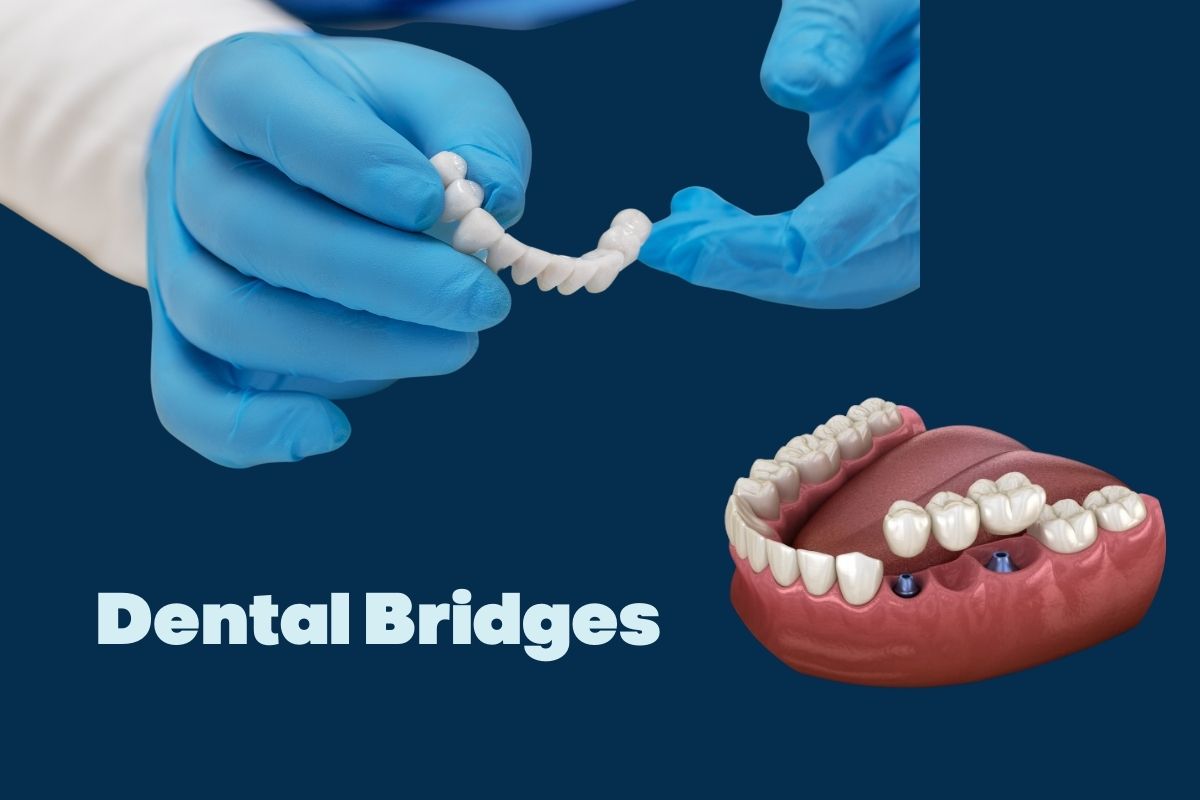
If you’re missing one or more teeth, dental bridges can offer an effective solution to restore function, appearance, and stability to your smile. Dental bridges come in various types, each designed to address specific needs and dental conditions. Here’s a breakdown of the four main types of dental bridges—Traditional, Cantilever, Maryland, and Implant-Supported—so you can better understand which option might be best for you.
1. Traditional Dental Bridges
What They Are
Traditional dental bridges are the most common type of bridge. They consist of one or more artificial teeth, called pontics, held in place by dental crowns. These crowns are placed on the natural teeth on either side of the gap, known as abutment teeth, which support the bridge.
How They Work
During the procedure, the abutment teeth are prepared by removing a small amount of enamel to make room for the crowns. Once prepared, the crowns and pontic(s) are custom-made and bonded to the abutment teeth, filling in the space left by missing teeth.
Ideal For
Traditional bridges are typically used when there are healthy natural teeth on both sides of the gap. They’re especially beneficial for those who need to replace one or two missing teeth in a row.
Pros and Cons
-
- Pros: Provides a strong, durable solution; that mimics natural teeth in appearance and function.
-
- Cons: Requires alteration of healthy teeth, which can make them more vulnerable to decay or future damage.
2. Cantilever Dental Bridges
What They Are
Cantilever dental bridges are similar to traditional bridges, but they are anchored by a crown on only one side of the missing tooth or teeth. This design is used when there’s only one natural tooth next to the gap.
How They Work
The single abutment tooth next to the missing space is prepared by removing a small amount of enamel, and a crown is placed to hold the pontic(s) in place. Because only one side of the bridge is anchored, this type of bridge places more force on the supporting tooth.
Ideal For
Cantilever bridges are useful for areas with limited support, such as replacing a missing tooth at the back of the mouth where only one adjacent tooth is available. However, they’re generally not recommended for areas that endure significant chewing pressure.
Pros and Cons
-
- Pros: Useful for areas with limited support, only requires one abutment tooth.
-
- Cons: Places more stress on the supporting tooth, which can increase the risk of damage or loosening over time.
3. Maryland Dental Bridges (Resin-Bonded Bridges)
What They Are
Maryland dental bridges, also known as resin-bonded bridges, are more conservative compared to traditional bridges. Instead of using crowns, Maryland bridges use a framework of metal or porcelain with “wings” that are bonded to the backs of the adjacent teeth.
How They Work
The metal or porcelain wings on each side of the pontic are bonded to the back surfaces of the abutment teeth with a strong resin. Because they don’t require crowns, Maryland bridges allow patients to keep more of their natural tooth structure intact.
Ideal For
Maryland bridges are generally ideal for replacing front teeth, as they don’t require much chewing pressure. They’re an excellent choice for younger patients or those who prefer a minimally invasive option.
Pros and Cons
-
- Pros: Minimally invasive; preserves the natural structure of the adjacent teeth.
-
- Cons: Less durable than other options, can be prone to detachment if subjected to excessive force and may be less effective for molars.
4. Implant-Supported Dental Bridges
What They Are
Implant-supported dental bridges are held in place by dental implants rather than by crowns or frameworks attached to adjacent teeth. Dental implants are titanium posts surgically placed into the jawbone, serving as artificial roots that anchor the bridge securely.
How They Work
Each implant is surgically placed where a missing tooth once was, creating a stable foundation for the bridge. Implant-supported bridges are ideal for those who are missing multiple teeth in a row, as they can support a series of artificial teeth.
Ideal For
Implant-supported bridges are an excellent option for those with multiple missing teeth or for those whose surrounding teeth are not suitable as abutments. They are especially useful in areas with significant chewing pressure, like the back of the mouth.
Pros and Cons
-
- Pros: Highly durable and stable; preserves bone health by stimulating the jawbone; no need to alter adjacent teeth.
-
- Cons: Requires surgical placement, which may involve a longer treatment timeline; typically more expensive than other types of bridges.
Choosing the Right Dental Bridge for Your Needs
Selecting the right type of dental bridge depends on various factors, including the location of the missing teeth, the health of the surrounding teeth, your budget, and your preferences for invasive procedures. Here’s a quick guide to help you decide:
-
- Traditional Bridges are a reliable, durable choice when you have healthy teeth on either side of the gap.
-
- Cantilever Bridges work well in areas where there is only one natural tooth adjacent to the gap, though they’re best suited for lower-stress areas.
-
- Maryland Bridges are ideal for front teeth replacements and are a good choice for those looking for a minimally invasive option.
-
- Implant-supported bridges offer excellent durability and support for multiple missing teeth, but they require a more extensive procedure and a higher initial cost.
Each type of dental bridge has unique benefits and potential drawbacks. Book a consultation today with a dental professional who can help you understand which bridge type will best restore your smile while meeting your needs and preferences. With the right bridge, you can enjoy a beautiful, functional smile and maintain your oral health for years to come.